Pumps & Workshop Overhaul for Water Treatment & RO Plants
RO plant pumps and repair for water treatment, ETP, and reverse osmosis plants — booster, dewatering, and transfer pumps that restore pressure and flow.
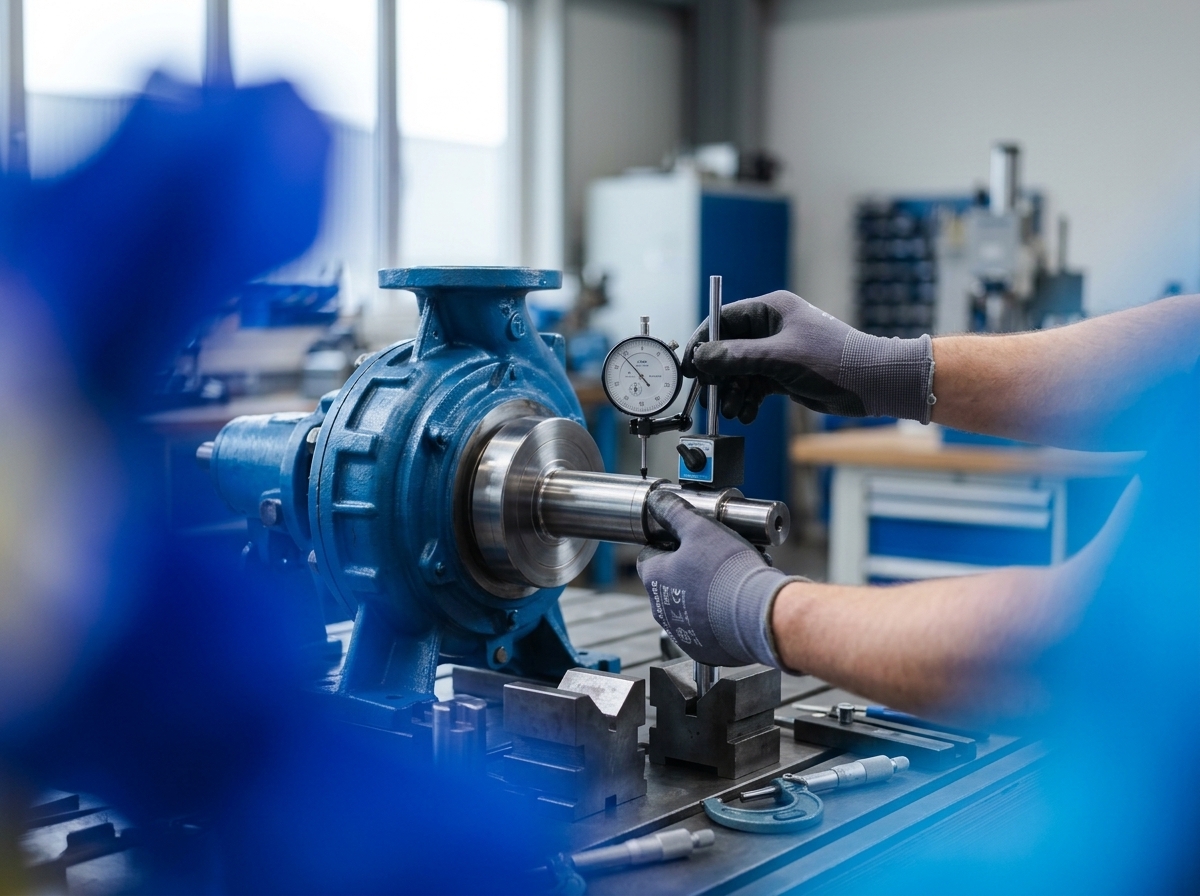
Water Treatment & RO Plants Fleet Specs
- 4 Types
- Pump Range
- 4 Modes
- Failure Solved
- Tested @ 1.5x PN
- Pressure & dynamic balance verified
- Gujarat Fast Response
- Ahmedabad, Vadodara, Ankleshwar
How we solve corrosive & critical fluid duties in water treatment & ro plants
Industrial water treatment plants, Common Effluent Treatment Plants (CETP), and industrial Reverse Osmosis (RO) desalinization skids depend on a coordinated hydraulic chain of high-pressure membrane boosters, raw water feed pumps, and chemical dosing systems. Across Gujarat's heavy industrial zones — including Ahmedabad, Surat, Ankleshwar, Dahej, and Vapi — achieving Zero Liquid Discharge (ZLD) mandates reliable pump performance. If an RO high-pressure booster pump loses discharge head, permeate flux drops immediately, compromising pure water supply and risking irreversible membrane fouling.
We supply, repair, and overhaul high-pressure multi-stage stainless steel booster pumps for RO skids, chemical metering pumps for antiscalant and pH neutralization, and heavy-duty slurry and dewatering pumps for ETP/STP clarifier sludge handling. Our workshop restores design discharge pressures, eliminates mechanical seal leaks, and corrects stage clearance wear across all water treatment pump configurations.
Which pumps water and RO plants use Water treatment, ETP, and RO plants operate specialized pump families tailored to varying pressures and solids content: 1. High-Pressure Multi-Stage Booster Pumps: Fabricated in SS304, SS316, or Duplex stainless steel, generating feed pressures from 15 to 70 bar to drive water through reverse osmosis membrane arrays. 2. Horizontal End-Suction Transfer Pumps: Moving clarified water, sand filter effluent, and softened water between treatment stages. 3. Heavy-Duty Submersible & Horizontal Slurry Pumps: Handling abrasive biological sludge, lime slurries, and coagulated solids in primary clarifiers and filter press circuits. 4. Chemical Dosing Metering Pumps: Accurately injecting sodium hypochlorite for disinfection, sodium bisulfite for dechlorination, antiscalants, and flocculants.
Common failure patterns in water and RO plants The primary failure modes in water treatment facilities include: - Internal interstage wear on booster pump impellers and diffusers caused by fine suspended sand and high-velocity water bypass. - Mechanical seal failure triggered by dry running, air entrainment, or high total dissolved solids (TDS) crystallization across seal faces. - Rapid impeller vane erosion on ETP dewatering and slurry pumps handling grit, lime, and abrasive biological flocs. - Motor overload trips resulting from operating pumps far off their best efficiency point (BEP) on altered system resistance curves. Our technical overhaul measures internal interstage running clearances, replaces worn neck rings and diffusers, and load-tests booster pumps against their design head-capacity curves.
Overhaul, testing, and maintenance standards We rebuild multi-stage booster pumps with genuine precision-cast impellers, diffusers, wear rings, and balanced mechanical seals. Slurry and dewatering pumps receive high-chrome alloy or elastomer-lined replacement components. Every repair includes complete strip-down cleaning, non-destructive crack testing, itemized quotation after inspection, dynamic balancing to ISO 5199 Grade G2.5 (< 1.0 g·mm/kg), and full hydraulic performance verification.
Plant reliability and AMC partnerships We partner with industrial utility superintendents, CETP operators, and water treatment engineers across Gujarat through structured Annual Maintenance Contracts (AMC). Our engineers conduct scheduled vibration monitoring on high-pressure booster bearings, inspect mechanical seal flush loops, and log monthly head-capacity performance baselines to catch stage wear before membrane feed pressure trips occur.
Interactive Chemical Metallurgy & Temperature Compatibility Matrix
ISO 5199 / API 685 Fluoropolymer & Superalloy Standards| Material of Construction | Classification | Max Temp Limit | Compatibility Status @ 65°C |
|---|---|---|---|
Virgin PFAStandard | Fluoropolymer Lining | 120°C | Recommended (A - Zero Corrosion) |
Virgin PTFEStandard | Fluoropolymer Solid/Lined | 120°C | Recommended (A - Zero Corrosion) |
PVDF | Fluoropolymer Thermoplastic | 85°C | Recommended (A - Zero Corrosion) |
Polypropylene | Commodity Thermoplastic | 50°C | Thermal Derating Exceeded (> 50°C) |
Hastelloy C-276Standard | High-Nickel Superalloy | 60°C | Thermal Derating Exceeded (> 60°C) |
SS316L | Austenitic Stainless Steel | Incompatible | Severe Corrosion / Rapid Failure (X) |
SSiC Silicon CarbideStandard | Sintered Ceramic Seal Face | 140°C | Recommended (A - Zero Corrosion) |
Off-gassing liquid prone to vapor locking. Sealless magnetic drive pumps with PFA casing lining and SSiC self-lubricating bearings prevent dry-running catastrophic seizure.
Severe Operating Challenges & Teflow Solutions
Common root causes of pump failure in water treatment & ro plants and how our rotating equipment engineers eliminate them.
Maintaining RO feed pressure
Mitigated via pure fluoropolymer wetted liners, silicon carbide (SSiC) thrust faces, and seal flush plans aligned to fluid vapor pressure.
Effluent & sludge handling
Mitigated via pure fluoropolymer wetted liners, silicon carbide (SSiC) thrust faces, and seal flush plans aligned to fluid vapor pressure.
Low-pressure trips
Mitigated via pure fluoropolymer wetted liners, silicon carbide (SSiC) thrust faces, and seal flush plans aligned to fluid vapor pressure.
Continuous operation
Mitigated via pure fluoropolymer wetted liners, silicon carbide (SSiC) thrust faces, and seal flush plans aligned to fluid vapor pressure.
Recommended Chemical Pumps
Specified and manufactured for continuous operation in aggressive chemical and process environments.
Centrifugal Chemical Pumps
Engineered for duty in water treatment & ro plants with zero emissions, robust metallurgy, and full spare parts availability.
Magnetic Drive Pumps
Engineered for duty in water treatment & ro plants with zero emissions, robust metallurgy, and full spare parts availability.
Teflon Diaphragm Pumps
Engineered for duty in water treatment & ro plants with zero emissions, robust metallurgy, and full spare parts availability.
Frequently Asked Questions
Clear answers regarding pump selection, seal flush plans, corrosion resistance, and plant maintenance contracts.
Ready to optimize pump uptime in your water treatment & ro plants facility?
Speak directly with our rotating equipment engineers in Ahmedabad. We confirm chemical compatibility, seal arrangements, and supply or overhaul schedules.