Pumps & Workshop Overhaul for Textile Processing
Textile processing pumps and repair in Gujarat — Teflow supplies and overhauls high-temperature thermic fluid circulation pumps, chemical dye dosing pumps, and heavy-duty effluent handling systems. Serving continuous dyeing, stenter, and finishing mills across Ahmedabad and Surat, our ISO 5199 aligned engineering overhauls restore thermal efficiency and prevent costly production stoppages.
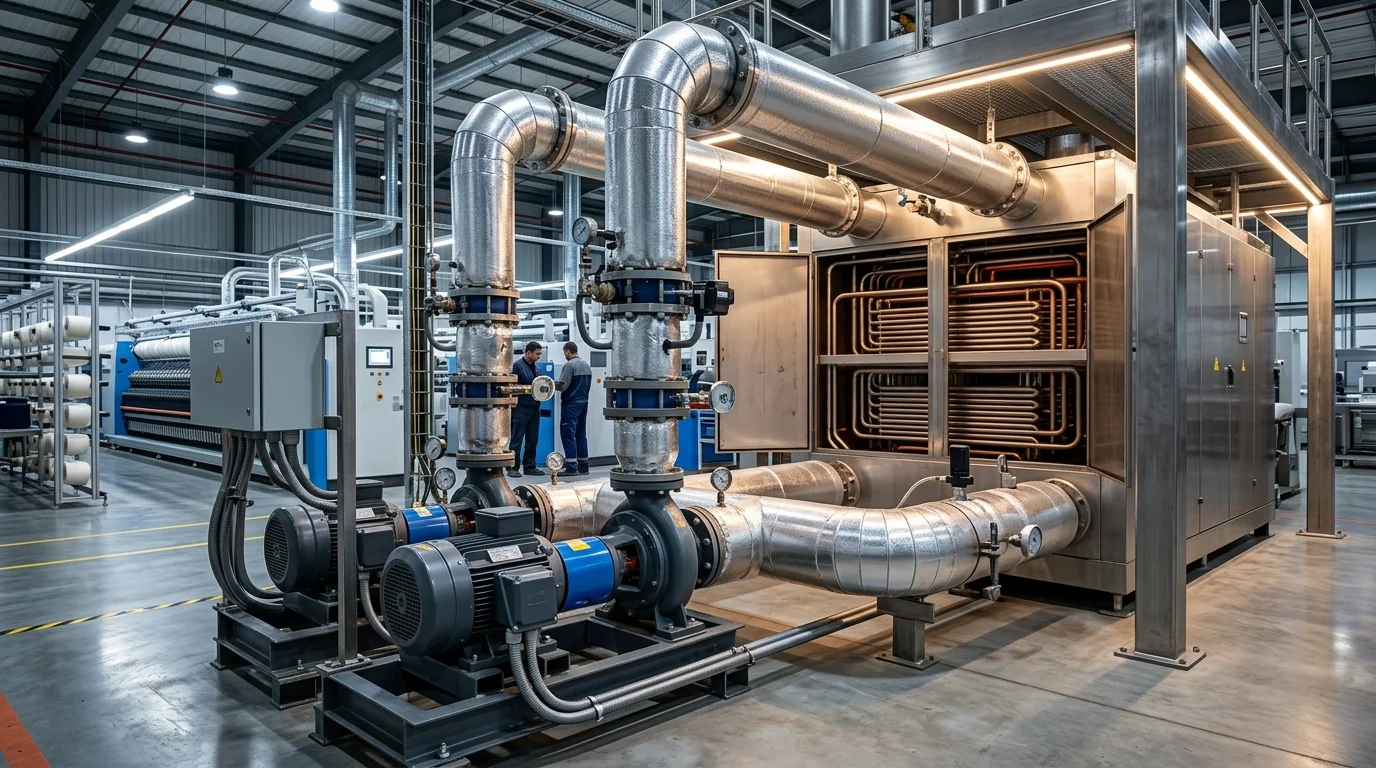
Textile Processing Fleet Specs
- 4 Types
- Pump Range
- 4 Modes
- Failure Solved
- Tested @ 1.5x PN
- Pressure & dynamic balance verified
- Gujarat Fast Response
- Ahmedabad, Vadodara, Ankleshwar
How we solve corrosive & critical fluid duties in textile processing
Gujarat is India's premier textile manufacturing powerhouse. Continuous fabric processing mills, synthetic fiber extrusion plants, printing houses, and yarn dyeing facilities across Ahmedabad (Narol, Odhav, Vatva) and Surat operate high-capacity equipment around the clock. Maintaining uninterrupted production across fabric stenters, jigger dyeing machines, bleaching ranges, and Common Effluent Treatment Plants (CETP) demands dependable rotating machinery capable of withstanding severe thermal, chemical, and abrasive operating stresses.
We supply, rebuild, and maintain high-temperature thermic oil circulation pumps for fabric heat-setting, corrosion-resistant chemical pumps for reactive dye and caustic dosing, and heavy-duty slurry pumps for textile wastewater dewatering. Our rotating equipment engineering keeps continuous textile operations running at peak thermal efficiency without costly fabric batch delays or unplanned machine stoppages.
Which pumps textile plants use Textile processing complexes rely on a rugged pump fleet engineered for continuous industrial duty: 1. High-Temperature Thermic Oil Circulation Pumps: Transferring heat transfer oils up to 300°C to heat-setting stenter frames, hot air dryers, and calendar rolls, where high thermal fatigue resistance, air-cooled seal chambers, and reliable shaft sealing are paramount. 2. Chemical Dosing & Metering Pumps: Delivering precise volumes of reactive dye liquors, concentrated caustic soda (NaOH), hydrogen peroxide (H2O2), and acetic acid during continuous fabric preparation and dyeing. 3. Multi-Stage Boiler Feed Water Pumps: Supplying high-pressure feedwater to process steam boilers operating at pressures from 10 to 35 bar. 4. Non-Clog Submersible & Horizontal Slurry Pumps: Handling fibrous, lint-laden wastewater, sizing starch solutions, and abrasive sludge in ETP clarifiers and filter press circuits.
Common failure patterns in textile plants The most frequent failures we diagnose in textile mills include: - Vapor locking and fluid coking in thermic fluid pumps operating below minimum continuous thermal flow rates. - Rapid mechanical seal carbonization and elastomer hardening from extreme temperature degradation. - Severe impeller vane erosion and rag binding in effluent sumps containing suspended fibers, lint, and grit. - Boiler feed pump suction cavitation triggered by deaerator transient pressure drops during sudden steam load changes. Our comprehensive field diagnostics isolate the operational root cause, allowing us to implement permanent hydraulic and mechanical corrections that prevent repeat breakdowns.
Energy efficiency and thermal optimization in dyeing houses In continuous textile processing mills, rotating equipment electricity and boiler fuel represent massive operating cost centers. Inefficient pumps running throttled far from their Best Efficiency Point (BEP) waste kilowatts and generate excess internal heat that accelerates seal wear. Our technical engineers perform pump operating point verification, measure motor current draw against factory hydraulic curves, and recommend precision impeller trimming or Variable Frequency Drive (VFD) retrofits on dye circulation headers. These optimization measures reduce electrical power consumption, lower thermal stress on mechanical seal chambers, and extend equipment operating life across continuous production schedules.
Chemical metering precision in fabric mercerizing and bleaching Fabric mercerization requires steady injection of 48% to 50% concentrated liquid sodium hydroxide at elevated temperatures to impart luster and tensile strength to cotton yarn. Centrifugal and dosing pumps handling caustic soda must maintain constant volumetric discharge without weeping through stuffing boxes, which would produce caustic crusting and localized shaft binding. Our workshop refits caustic dosing skids with chemical-grade solid polypropylene or GFPTFE centrifugal pumps fitted with external single mechanical seals and quench gland connections, preventing crystallization across friction faces.
Repair and maintenance for textile processing We overhaul thermic oil circulation pumps with specialized high-temperature metal bellows mechanical seals, dynamic rotor balancing to ISO 5199 Grade G2.5, and internal volute de-coking. For chemical and effluent pumps, we fit semi-open or vortex impellers, silicon carbide mechanical seals, and heavy-duty shaft sleeves. Every repair begins with complete strip-down cleaning, non-destructive crack testing, transparent quoting after inspection, and hydrostatic shell testing before handover.
Plant reliability and AMC programs We partner with textile processors across Narol, Odhav, Vatva, Surat, and Bharuch through structured Annual Maintenance Contracts (AMC). Our engineers conduct scheduled vibration analysis on thermic oil pump bearings, monitor boiler feed pump discharge head baselines, and inspect mechanical seal flush loops during planned weekly washdowns, ensuring maximum uptime across all processing shifts.
Interactive Chemical Metallurgy & Temperature Compatibility Matrix
ISO 5199 / API 685 Fluoropolymer & Superalloy Standards| Material of Construction | Classification | Max Temp Limit | Compatibility Status @ 65°C |
|---|---|---|---|
Virgin PFAStandard | Fluoropolymer Lining | 120°C | Recommended (A - Zero Corrosion) |
Virgin PTFEStandard | Fluoropolymer Solid/Lined | 120°C | Recommended (A - Zero Corrosion) |
PVDF | Fluoropolymer Thermoplastic | 85°C | Recommended (A - Zero Corrosion) |
Polypropylene | Commodity Thermoplastic | 50°C | Thermal Derating Exceeded (> 50°C) |
Hastelloy C-276Standard | High-Nickel Superalloy | 60°C | Thermal Derating Exceeded (> 60°C) |
SS316L | Austenitic Stainless Steel | Incompatible | Severe Corrosion / Rapid Failure (X) |
SSiC Silicon CarbideStandard | Sintered Ceramic Seal Face | 140°C | Recommended (A - Zero Corrosion) |
Off-gassing liquid prone to vapor locking. Sealless magnetic drive pumps with PFA casing lining and SSiC self-lubricating bearings prevent dry-running catastrophic seizure.
Severe Operating Challenges & Teflow Solutions
Common root causes of pump failure in textile processing and how our rotating equipment engineers eliminate them.
High-temperature thermic oil duty
Mitigated via pure fluoropolymer wetted liners, silicon carbide (SSiC) thrust faces, and seal flush plans aligned to fluid vapor pressure.
Dye & chemical dosing accuracy
Mitigated via pure fluoropolymer wetted liners, silicon carbide (SSiC) thrust faces, and seal flush plans aligned to fluid vapor pressure.
Effluent handling
Mitigated via pure fluoropolymer wetted liners, silicon carbide (SSiC) thrust faces, and seal flush plans aligned to fluid vapor pressure.
Continuous production
Mitigated via pure fluoropolymer wetted liners, silicon carbide (SSiC) thrust faces, and seal flush plans aligned to fluid vapor pressure.
Recommended Chemical Pumps
Specified and manufactured for continuous operation in aggressive chemical and process environments.
Centrifugal Chemical Pumps
Engineered for duty in textile processing with zero emissions, heavy-duty metallurgy, and full spare parts availability.
Magnetic Drive Pumps
Engineered for duty in textile processing with zero emissions, heavy-duty metallurgy, and full spare parts availability.
Teflon (GFPTFE) Centrifugal Pumps
Engineered for duty in textile processing with zero emissions, heavy-duty metallurgy, and full spare parts availability.
Frequently Asked Questions
Clear answers regarding pump selection, seal flush plans, corrosion resistance, and plant maintenance contracts.
Ready to optimize pump uptime in your textile processing facility?
Speak directly with our rotating equipment engineers in Ahmedabad. We confirm chemical compatibility, seal arrangements, and supply or overhaul schedules.