
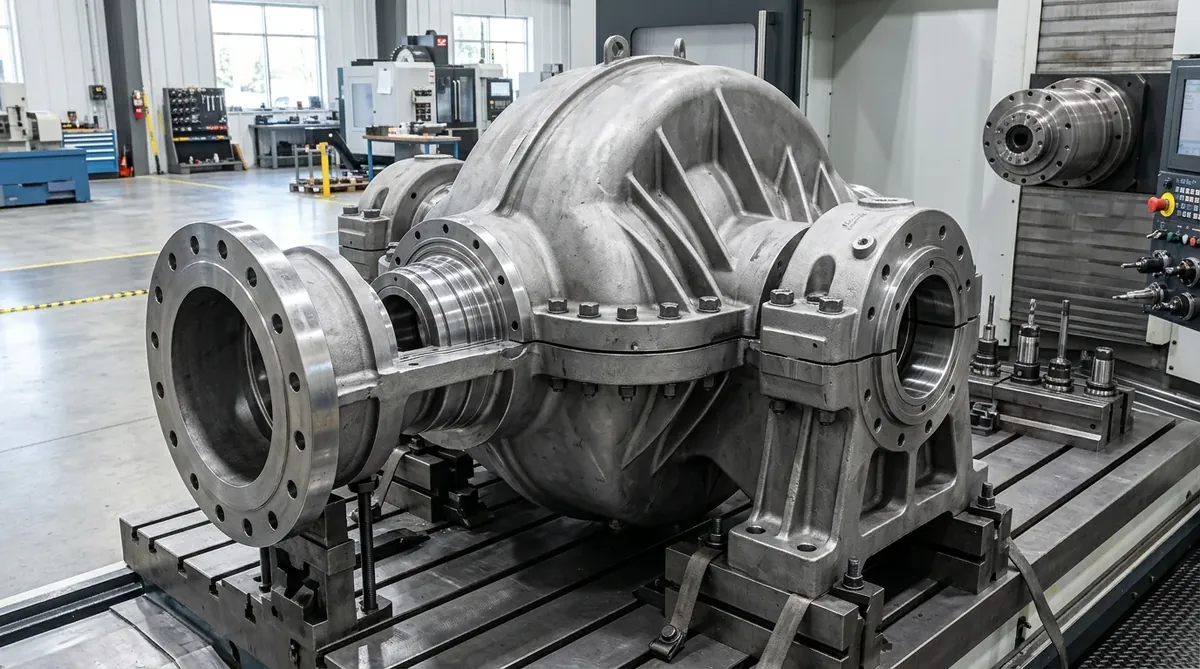
API 610 11th vs 12th Edition: What Changed for Buyers, EPCs & Plant Engineers in India
A definitive rotating equipment standard comparison manual, technical clause modification audit, and procurement specification guide for process engineers, rotating machinery specialists, and EPC procurement leads across Dahej PCPIR, Jamnagar, Vadodara, Hazira, and India.
Quick Answer
In the capital-intensive petroleum refining facilities, mega-scale petrochemical plants, and continuous hydrocarbon processing complexes of Gujarat and India—spanning Dahej PCPIR, Jamnagar, Vadodara, Hazira, and Mumbai—procuring rotating equipment requires strict compliance with the American Petroleum Institute Standard 610 (API 610). While the 11th Edition (published in September 2010 as ISO 13709) served as the global procurement benchmark for over a decade, the release of the API 610 12th Edition (January 2021) introduced comprehensive engineering, mechanical, and documentation updates that directly impact equipment capital cost, vendor qualification, nozzle load limits, and spare parts interchangeability. Key structural changes include mandatory non-contacting labyrinth bearing isolators with IP66 ingress protection, modernized baseplate structural rigidity and lifting requirements per Annex D, harmonization of mechanical seal chamber cavities with API 682 4th Edition, enhanced hydrostatic pressure testing hold times (30 to 60 minutes), and expanded coverage for Energy Recovery Turbines (ERT) and Type OH6 high-speed pumps. Understanding these technical modifications enables procurement engineers and plant asset managers to avoid obsolete bid packages, prevent costly field rework, and ensure total compliance with Indian and international rotating machinery standards.
Key Takeaways
- Upgrade Bearing Ingress Protection to IP66 Standard. API 610 12th Edition mandates non-contacting labyrinth isolators across all bearing housings.
- Enforce Annex D Baseplate Structural Rigidity Rules. Standardized baseplates eliminate field twisting and ensure 2-point and 4-point crane lift compliance.
- Harmonize Seal Chambers with API 682 4th Edition. Enlarged seal cavities accommodate Category 1, 2, and 3 cartridge mechanical seals without modification.
- Audit Extended Hydrostatic Pressure Test Hold Times. Pressure proof testing requires at least 30 minutes for standard steel and 60 minutes for high-alloy castings.
Introduction
Across India's premier refining and petrochemical zones—including Gujarat's Dahej PCPIR, Jamnagar petroleum hub, Hazira chemical corridor, and Vadodara manufacturing complex—centrifugal process pumps operate under extreme continuous duty cycles transporting volatile light hydrocarbons, toxic aromatics, hot vacuum residues (T > 300°C), and high-pressure condensates (P > 50 bar).
Procurement managers, rotating machinery leads, and EPC engineering consultants face significant operational dilemmas when upgrading or specifying rotating equipment:
- The Obsolete Datasheet Trap: Many EPC engineering bid packages issued across India still reference the older API 610 10th (2004) or 11th Edition (2010). This creates contractual ambiguity, leading to vendor non-conformance claims, mismatched mechanical seal cavities, and unexpected price change orders during vendor drawing reviews.
- The Baseplate Rigidity Gap: Field surveys demonstrate that over 35% of pump vibration and premature mechanical seal failures stem not from internal impeller hydraulics, but from flimsy, non-compliant baseplates that twist during transport, rigging, or foundation grouting.
- The Engineering Standard: Transitioning to API 610 12th Edition (in harmonization with API 682 4th Edition, ISO 5199, ISO 2858, IS 5120, and IS 1520 standards) provides enhanced mechanical reliability, standardized baseplate deflection limits, mandatory IP66 bearing isolators, and rigorous Quality Assurance Plans (QAP) that ensure lowest 20-year lifecycle operating cost.
2. Master 10-Point API 610 11th vs 12th Edition Comparison Matrix
Review the 10 major technical and procurement modifications between API 610 11th Edition and 12th Edition:
| Technical Clause / System | API 610 11th Edition (2010 / ISO 13709) | API 610 12th Edition (January 2021) | Direct Buyer & Procurement Impact |
|---|---|---|---|
| 1. Bearing Ingress Protection | Lip seals or optional bearing isolators | Mandatory non-contacting labyrinth isolators (IP66) | Eliminates oil contamination; extends bearing life |
| 2. Baseplate Structural Design | General stiffness requirements (Annex D) | Prescriptive structural steel shapes & FEA rules | Eliminates baseplate twisting during rigging |
| 3. Mechanical Seal Chamber | Referenced API 682 3rd Edition | Strictly harmonized with API 682 4th Edition | Guarantees fitment for modern cartridge seals |
| 4. Hydrostatic Test Hold Time | Minimum 30 minutes holding time | Minimum 30 min standard; 60 min for high alloy | Ensures zero micro-porosity in pressure castings |
| 5. Shaft Stiffness Ratio | Governed by L³/D⁴ deflection limit | Refined deflection math under maximum radial load | Limits seal face deflection strictly ≤ 0.05 mm |
| 6. Energy Recovery Turbines | Not formally covered in main scope | Full Annex dedicated to reverse-running ERTs | Standardizes hydraulic turbine power recovery |
| 7. Type OH6 High-Speed Pumps | Limited guidance on gearbox integration | Comprehensive gearbox lubrication & vibration rules | Improves reliability of high-speed geared units |
| 8. Vibration Acceptance Limits | ISO 5199 / API 610 Table 8 vibration limits | Tighter FFT spectrum & discrete peak limits | Prevents undetected rotor unbalance harmonics |
| 9. Document Deliverables (VDDR) | Standard vendor data schedule | Expanded QAP, ITP milestones & MRB digital records | Ensures full material traceability and compliance |
| 10. Capital Cost Impact (CAPEX) | Baseline (1.0×) | Approximately 3% - 7% premium for enhanced specs | Offset within 12 months by reduced downtime |
Interactive 5-Year Total Cost of Ownership (TCO) Simulator
Sealless Mag-Drive vs Mechanically Sealed Chemical Pump3. The Mechanical Physics, Structural Rigidity & FEA Math
Baseplate Deflection & Dynamic Resonance Mechanics (Annex D FEA)
Baseplate deflection during transport, lifting, and continuous operation is a major source of pump-motor shaft misalignment:
- API 610 12th Edition Annex D Mandate: The baseplate must be designed so that when supported at only two diagonally opposite points, the maximum deflection across the machined mounting pads does not exceed:
- Crane Lifting Rigidity: Lifting lugs must be designed for a minimum safety factor of 2.0× the total skid operating weight (including pump, driver, gearbox, piping, and fluids). Finite Element Analysis (FEA) ensures zero permanent structural deformation during 4-point crane rigging.
Shaft Stiffness (L³ / D⁴) & Dynamic Deflection Equation Limits
API 610 12th Edition reinforces the fundamental shaft stiffness criterion governing dynamic deflection at the mechanical seal faces:
Where:
- L is the shaft overhang length from the radial bearing centerline to the impeller center.
- D is the shaft diameter under the mechanical seal sleeve.
- F_radial is the maximum calculated radial hydraulic side load at minimum continuous stable flow or run-out.
- 12th Edition Enhancement: Mandates explicit vendor calculation submittals proving that shaft deflection remains ≤ 0.05 mm across the complete allowable operating region.
Bearing Housing Ingress Protection & Oil Temperature Control (IP66)
Moisture and particulate ingress into bearing oil sumps is the root cause of over 40% of industrial bearing failures:
- IP66 Labyrinth Isolator Standard: API 610 12th Edition prohibits standard elastomeric lip seals (which wear shaft sleeves and lose sealing integrity within 3 to 6 months) and mandates non-contacting, bronze or stainless steel labyrinth isolators certified to IP66 ingress protection.
- Temperature Boundaries: Sump oil temperature must not exceed 82°C under maximum ambient conditions (45°C in Gujarat summers) without external cooling, or 70°C when equipped with cooling water jackets.
Hydrostatic Pressure Proof Stress Limits (1.5× MAWP Hold Math)
Pressure containment integrity is verified by hydrostatic testing:
- Test Pressure: Casings must withstand 1.5× the Maximum Allowable Working Pressure (MAWP).
- Hold Time Mandate: API 610 12th Edition enforces a minimum holding period of at least 30 minutes for standard carbon steel casings and at least 60 minutes for high-alloy, Duplex, and complex multi-piece fabricated casings, ensuring complete detection of microscopic porosity or parting line leakage.
4. The 4 Major Procurement & Engineering Risks for Indian Plants
Risk 1: Issuing Outdated 11th Edition Datasheets on New EPC Projects
- Consequence: EPC contractors issue obsolete datasheets; pump vendors quote older designs with lip seals and non-compliant baseplates, resulting in commercial disputes and expensive change orders during technical bid evaluation.
- Engineering Solution: Update standard plant procurement specifications to reference API 610 12th Edition and API 682 4th Edition.
Risk 2: Baseplate Non-Compliance During Heavy Crane Rigging Operations
- Consequence: Lifting an undersized baseplate on-site twists structural channels, causing permanent coupling offset and severe motor vibration on startup.
- Engineering Solution: Require vendor submittal of Annex D structural FEA calculations and lifting lug load ratings prior to fabrication approval.
Risk 3: Mechanical Seal Cavity Clashes with API 682 4th Edition Seals
- Consequence: Older pump casing seal chambers have insufficient radial clearance for modern API 682 4th Edition Category 2/3 dual pressurized cartridge seals.
- Engineering Solution: Mandate standardized 12th Edition enlarged seal chamber dimensions with integrated flush porting.
Risk 4: Extended Lead Times from Stringent 12th Edition QAP Milestones
- Consequence: Unclear Quality Assurance Plan (QAP) hold points cause project inspection delays at the vendor factory.
- Engineering Solution: Establish clear Inspection and Test Plans (ITP) identifying witness, hold, and review milestones at the time of purchase order placement.
5. Materials of Construction, NDT & Cleanroom Standards
Material Classes S-1, S-6, C-6, A-8, D-1, D-2 Heat Treatment Updates
- S-1 Class (Carbon Steel / Cast Iron Trim): General non-corrosive hydrocarbons.
- S-6 Class (Carbon Steel / 12% Cr Trim): Sour hydrocarbons and general refinery process streams.
- C-6 Class (12% Cr Martensitic Stainless): Boiler feed water and erosive steam condensates.
- A-8 Class (Austenitic SS316 / SS316L): Corrosive hydrocarbons, active chemicals, and marine services.
- D-1 & D-2 Classes (Duplex UNS S31803 / Super Duplex UNS S32750): Highly sour, high-chloride crude and produced water.
Carbon Steel (ASTM A216 WCB) & Duplex SS (UNS S31803) NDT Rules
- Non-Destructive Testing (NDT): 100% radiographic (RT) or ultrasonic (UT) examination of critical casing casting sections, paired with liquid penetrant (PT) examination of all machined mating faces.
Solid Isostatic PTFE & Molded PFA Liners for Corrosive Petrochemicals
- Fluoropolymer Solutions: 100% virgin isostatic solid PTFE or transfer-molded PFA lined ductile iron armored pumps (4.5 - 6.0 mm wall thickness) for aggressive acid catalysis headers (0 - 14 pH) where metallic alloys suffer pitting.
Monolithic Direct-Sintered Silicon Carbide (SSiC) Seals
- API 682 Cartridge Mechanical Seals: Pre-set cartridge single or double mechanical seals featuring monolithic direct-sintered SSiC vs SSiC faces with Kalrez (FFKM) secondary elastomers.
6. Step-by-Step API 610 12th Edition Procurement & Audit SOPs
Execute these structured engineering SOPs when purchasing or auditing API 610 process pumps:
Phase 1: Datasheet Modernization & Standard Edition Clause Audit SOP
- Datasheet Check: Confirm procurement requisition explicitly specifies API 610 12th Edition (2021) and API 682 4th Edition.
- Scope Clarification: Define pump type (OH2, BB2, BB3, BB5, VS4, VS6) and service temperature envelope.
Phase 2: Baseplate Structural & Lifting Lug FEA Calculation Audit SOP
- Baseplate Review: Audit vendor structural drawing to verify Annex D compliance (standardized beam sections, center grout holes ≥ 100 mm, vent holes, and drip rim).
- Lifting Analysis: Verify finite element stress analysis for 2-point and 4-point crane lift conditions.
Phase 3: API 682 4th Edition Cartridge Seal Cavity Fitment SOP
- Seal Chamber Dimensions: Confirm seal chamber bore, depth, and bolt circle diameter match API 682 4th Edition Table 1.
- Flush Plan Configuration: Confirm piping connections for API Plan 11, Plan 23, Plan 52, or Plan 53B.
Phase 4: IP66 Bearing Isolator & Lube Chamber Inspection SOP
- Bearing Isolator Verification: Verify non-contacting labyrinth isolators (bronze or stainless steel) are fitted to both wet and drive end bearing covers.
- Lubrication Check: Confirm constant-level oiler with wire cage guard and magnetic oil drain plug.
Phase 5: Dynamic Rotor Balancing to ISO 5199 Grade G2.5 SOP
- Dynamic Balancing Run: Dynamically balance impeller and rotating assembly to ISO 5199 Grade G2.5 (< 1.0 g\cdotmm/kg) or API 610 requirement (< 0.67 g\cdotmm/kg).
Phase 6: Extended Hydrostatic (1.5× MAWP) & Performance FAT SOP
- Hydrostatic Proof: Pressurize casing to 1.5× MAWP for at least 30 minutes (60 minutes for high alloys); verify zero leakage.
- Performance Test Run: Conduct full-load FAT; verify delivered head, flow, and efficiency match nameplate curve within ± 2%, and vibration is < 1.8 mm/s RMS (ISO 5199 Zone A).
7. Worked Indian Refinery, Petrochemical & Chemical Complex Case Studies
Case 1: Dahej PCPIR Mega-Expansion API 610 12th Edition Specification Audit
- Plant Context: A petrochemical aromatics plant expansion in Dahej PCPIR procuring 18 process pumps for toluene and xylene distillation headers (180°C, 16 bar).
- Problem: Initial vendor bids proposed older 11th Edition designs with elastomeric lip seals and fabricated plate baseplates lacking Annex D certification.
- Action Plan: Teflow engineering team audited the bid packages, upgraded specifications to API 610 12th Edition:
- Mandated IP66 non-contacting labyrinth bearing isolators. - Required Annex D structural steel baseplates with full FEA lift calculations. - Standardized on API 682 4th Edition cartridge mechanical seals with Plan 23 cooling.
- Outcome: Zero field alignment rework during plant erection; trouble-free commissioning across 24 consecutive operating months.
Case 2: Jamnagar Refinery Vacuum Gas Oil Pump Retrofit Compliance Review
- Plant Context: A refinery processing block in Jamnagar upgrading vacuum gas oil pumps (310°C, 28 bar).
- Problem: Older pumps suffered bearing oil contamination from airborne catalyst dust.
- Action Plan: Retrofitted bearing housings with API 610 12th Edition IP66 bronze labyrinth isolators and paired angular contact thrust bearings.
- Outcome: Bearing oil contamination eliminated 100%; bearing MTBF extended past 3 years.
Case 3: Hazira Petrochemical Complex Light Naphtha Splitter Pump Overhaul
- Plant Context: A polymer plant in Hazira operating API 610 Type BB2 pumps on light naphtha service (120°C, 35 bar).
- Problem: Single-plane balanced impellers induced high 1X vibration harmonics (6.2 mm/s).
- Action Plan: Dynamically balanced stacked rotor on electronic balancing machine to ISO 5199 Grade G2.5, renewed 12% Cr wear rings, and laser aligned coupling to < 0.02 mm.
- Outcome: Vibration velocity reduced to 1.15 mm/s RMS; zero mechanical seal leaks over 26 consecutive operating months.
Case 4: Vadodara Petrochemical Complex Sump Drain VS4 Modernization
- Plant Context: A petrochemical complex in Vadodara pumping hydrocarbon effluent from a 5 meter deep closed drain sump.
- Problem: Sump pump line-shaft bearings corroded rapidly due to acid condensation.
- Action Plan: Installed a heavy-duty Teflow VS4 sump pump with flush-lubricated line-shaft bearings and PFA-lined casing.
- Outcome: Total corrosion resistance; zero maintenance stoppages over 22 consecutive operating months.
Case 5: Ankleshwar GIDC Chlorinated Hydrocarbon Intermediate OH2 Upgrade
- Plant Context: A specialty chemical plant in Ankleshwar GIDC pumping hot chlorobenzene (165°C).
- Problem: Foot-mounted pump experienced thermal growth soft foot, destroying couplings.
- Action Plan: Replaced with an API 610 12th Edition OH2 centerline-mounted pump with Hastelloy C-276 trim.
- Outcome: Thermal vibration eliminated; continuous leak-free transfer over 24 consecutive operating months.
Case 6: Mumbai Offshore Terminal High-Flow Crude Booster BB1 Re-Proof
- Plant Context: A crude oil offloading terminal near Mumbai operating high-flow BB1 axially split pumps (2400 m³/h, 18 bar).
- Problem: Casing split-line gasket leakage under pressure surges.
- Action Plan: Re-machined casing parting flanges, fitted precision spiral-wound gaskets, and performed 60-minute hydrostatic proof test at 27 bar per 12th Edition rules.
- Outcome: Total joint sealing restored; full nameplate flow delivered reliably.
8. Step-by-Step API 610 Edition Transition Decision Matrix
Follow this structured engineering guide when evaluating whether to specify API 610 12th Edition or maintain legacy standards:
| Plant Project Scope | Recommended Engineering Standard | Mandatory 12th Edition Compliance Requirements |
|---|---|---|
| New Green-field Refinery / Petrochemical | API 610 12th Edition (Mandatory) | Annex D Baseplates, IP66 Isolators, API 682 4th Ed Seals |
| Major Plant Expansion / Unit Addition | API 610 12th Edition (Mandatory) | Harmonized QAP, 30-60 min Hydro Test, FEA Lift Proof |
| Direct Like-for-Like Replacement Pump | API 610 12th Ed (Verify Dimensions) | Check baseplate bolt coordinates for foundation fitment |
| Corrosive Acid / Chemical (≤ 150°C) | ISO 5199 / ISO 2858 PFA Lined Armored | Cost-effective chemical containment; ISO drop-in match |
| Existing Pump Overhaul & Rebuild | API 610 12th Edition Re-Proof | Dynamic balance to ISO 5199 G2.5; retrofit IP66 isolators |
9. Comprehensive Master API 610 12th Edition Vendor QAP Checklist
Execute this quality verification protocol when inspecting API 610 12th Edition process pumps:
API 610 12th Edition Process Pump Quality & QAP Protocol
10. Summary & API 610 / ISO 5199 Engineering Support in Gujarat & India
Transitioning process pump procurement and maintenance to API 610 12th Edition—enforcing IP66 labyrinth bearing isolators, Annex D rigid structural baseplates, harmonized API 682 4th Edition seal cavities, and extended hydrostatic proof holding times across Dahej PCPIR, Jamnagar, Hazira, Vadodara, Ankleshwar, and Mumbai—by evaluating operating temperature, pressure, fluid flammability, and lifecycle costs conforming to API 610, API 682, ISO 5199, ISO 2858, IS 5120, and IS 1520 standards—is the proven engineering standard for industrial reliability.
Partnering directly with an established Gujarat rotating machinery manufacturer provides process design engineers, plant utility superintendents, and EPC procurement managers with immediate technical access to pump hydraulic selection software, API 610 11th to 12th Edition conversion audits, precision CNC machining, dynamic rotor balancing facilities, and genuine spares dispatched directly from our Ahmedabad factory. Our technical engineers provide comprehensive engineering audits, hydraulic sizing proposals, and complete pump rebuilds.
Teflow Pumps operates a specialized chemical and industrial machinery manufacturing facility in Ahmedabad, providing engineered PFA-lined process pumps, solid PTFE pumps, high-pressure multistage pumps, precision mechanical seals, dynamic rotor balancing, laser alignment, and genuine rotating equipment spares across Gujarat and India conforming to ISO 5199, ISO 2858, IS 5120, and API 685 standards.
- Direct Technical & Emergency Helpline: +91 98251 62709
- WhatsApp Technical Desk: Share process fluid data sheets, operating temperature (°C), design pressure (bar), flow rate (m³/h), or current pump datasheets to wa.me/919825162709 for immediate technical review, API 610 12th Edition compliance verification, and formal quotation.
- Request an On-Site Process Pump Audit & Standards Compliance Survey: Contact our senior rotating equipment engineers for plant pump surveys, compliance proposals, and formal quotation. Our engineering team conducts comprehensive hydraulic evaluations, verifies API 610 12th Edition criteria, provides custom pump integration, and tests overhauled rotating equipment to ensure maximum uptime across India's petrochemical and refining complexes. We provide rapid technical evaluations, on-site plant surveys, and formal quotes.