
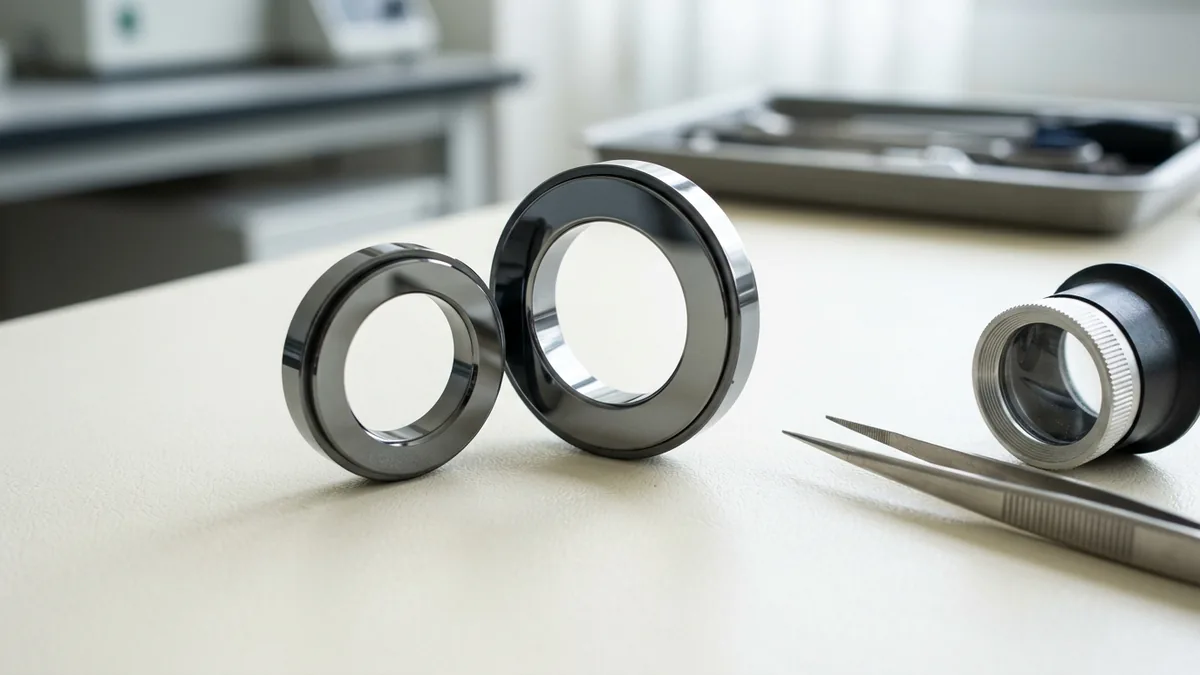
Mechanical Seal Damage Reasons & Root Cause Failure Analysis: The Complete Engineering Forensic Guide
A definitive technical failure analysis manual, seal damage forensic classification standard, and reliability optimization protocol for plant maintenance managers, chemical process engineers, and rotating equipment specialists across Vadodara, Nandesari GIDC, Ranoli GIDC, Makarpura, Dahej PCPIR, and Gujarat.
Quick Answer
In large chemical manufacturing complexes, petrochemical refineries, synthetic polymer synthesis plants, and bulk pharmaceutical facilities across Gujarat—such as in Vadodara (Nandesari GIDC, Ranoli, Koyali, Makarpura) and Dahej PCPIR—over 70% of premature mechanical seal replacements are performed without diagnosing the physical root cause of seal damage. When maintenance teams simply pull a failed seal and install an identical replacement without forensic teardown, the new seal frequently fails within days or weeks. Mechanical seal damage reasons follow distinct physical, chemical, thermal, and tribological mechanisms: thermal heat checking (fine radial spider-web cracks from dry running), carbon face blistering (subsurface oil vaporization), dynamic O-ring explosive decompression or chemical swelling, spring hang-up from sludge packing, and shaft sleeve fretting corrosion from excessive radial runout (> 0.03 mm). Conforming to ISO 5199, ISO 2858, IS 5120, and API 682 standards, performing a systematic Root Cause Failure Analysis (RCFA) involving optical monochromatic light band inspection (≤ 2 helium light bands), microscopic face examination, and elastomer compatibility audits enables plant reliability engineers to eliminate recurring seal failures permanently.
Key Takeaways
- Never Discard a Failed Mechanical Seal Without Visual Inspection. The physical wear pattern on sliding faces reveals the exact hydraulic or operating defect.
- Fine Radial Cracks ("Heat Checking") Prove Interfacial Dry Running. Thermal gradients exceeding material stress limits crack Silicon Carbide and Tungsten Carbide rings.
- Carbon Face Blistering Originates from Viscous Fluid Flashing. Trapped subsurface fluid expands violently, popping circular craters out of the carbon nose.
- Swollen or Hardened O-Rings Indicate Polymer Chemical Attack. Incorrect elastomer selection leads to loss of resilience, extrusion, and secondary leakage.
Introduction
In continuous chemical manufacturing complexes, petrochemical refineries, specialty polymer facilities, and bulk pharmaceutical synthesis units across Vadodara, Nandesari GIDC, Ranoli, Makarpura, and Dahej PCPIR, mechanical seals represent the single most vulnerable component in centrifugal rotating machinery.
Plant managers, maintenance superintendents, and reliability engineers face severe recurring hurdles:
- The Rapid Repeat Failure Cycle: Mechanical seals are frequently replaced without root-cause diagnosis, failing again within days because underlying operating causes—such as flush fluid vaporization, piping misalignment, or elastomer chemical attack—remain uncorrected.
- The Diagnostic Science of Seal Forensics: Mechanical seal components retain precise physical evidence of failure mechanisms. Lapped face contact patterns, discoloration rings, surface fracture morphology, and elastomer degradation profiles provide conclusive proof of operating malfunctions.
- The Engineering Standard: Implementing a structured Root Cause Failure Analysis (RCFA) protocol conforming to ISO 5199, ISO 2858, IS 5120, and API 682 standards—mandating optical helium light band audits (≤ 2 bands), microscopic fracture analysis, precision diamond relapping, and API auxiliary piping optimization—eliminates repeat failures and extends seal MTBF beyond 35,000 operating hours.
2. Master Mechanical Seal Damage Taxonomy & Forensic Classification Matrix
Review the primary physical damage symptoms, forensic root causes, and corrective actions:
| Visible Seal Damage Symptom | Forensic Mechanism | Primary Root Cause Operating Defect | Immediate Corrective Engineering Action |
|---|---|---|---|
| Fine Radial Spider-Web Cracks on Face | Thermal Heat Checking | Dry running / lack of lubrication; fluid flashing | Restore API flush plan; verify minimum liquid flow |
| Circular Pits / Craters on Carbon Face | Subsurface Blistering | High-viscosity oil vaporization during thermal swings | Upgrade to monolithic SSiC or electro-graphite carbon |
| Elastomer O-Ring Swollen, Soft, Gummy | Chemical Incompatibility | Solvent/chemical absorption into elastomer matrix | Upgrade secondary seals to genuine FFKM (Kalrez) |
| O-Ring Rock Hard, Brittle, Radial Cracks | Thermal Degradation / Aging | Operating temperature exceeds polymer rating | Convert to high-temp FFKM or metal bellows seal |
| Springs Clogged Solid with Hard Crust | Slurry Spring Hang-Up | Abrasive solids/crystallization inside spring pockets | Convert to external single wave spring / Plan 32 flush |
| Deep Grooves Cut into Shaft Sleeve | Sleeve Fretting Corrosion | Excessive radial shaft runout (> 0.03 mm) | True pump shaft; upgrade sleeve to Duplex SS 2205 |
| Uneven / 360° Wide Contact Wear Track | Face Distortion / Misalignment | Over-torqued gland bolts / cocked stationary seat | True gland face squareness; torque bolts with cross pattern |
3. The Tribological Physics & Thermodynamic Mechanics of Seal Damage
Thermal Stress & Critical Heat Checking Temperature (ΔT_shock = [σ_f (1-\nu)] / [E α])
When mechanical seal faces experience boundary friction or momentary dry running, interfacial frictional heat (Q = µ· P · A · V) causes steep localized thermal gradients:
Interactive Engineering Hydraulic Sizer
Live ISO 5199 / API 610 Dynamic EngineWhere:
- σ_f is material tensile fracture strength, \nu is Poisson's ratio.
- E is Young's modulus of elasticity, α is the coefficient of thermal expansion.
- Heat Checking Mechanics: Direct-sintered Silicon Carbide (SSiC) and Tungsten Carbide have high elastic moduli (E > 400 GPa) and low tensile ductility. When localized surface temperatures exceed ΔT_critical, surface compressive stresses transition into severe tensile residual stresses upon cooling, propagating fine radial micro-cracks ("heat checking") across the lapped sealing mirror.
Fluid Film Vaporization & Micro-Cavitation Phase Changes
- Phase Change Dynamics: Under stable operation, mechanical seal faces glide on a sub-micron liquid film (h_0 ≈ 0.5 µm). If seal chamber pressure drops below fluid saturation vapor pressure (P_chamber < P_sat), liquid flashes into vapor between the faces.
- Face Chattering: The sudden transition from hydrodynamic liquid lubrication to dry vapor friction spikes frictional torque, causing high-frequency stick-slip chattering, chipping the brittle outer edges of ceramic rings and producing puffing vapor leaks.
Elastomer Chemical Swelling, Compression Set & Explosive Decompression
- Chemical Absorption: When aggressive solvents (e.g., toluene, dichloromethane, hot caustic) diffuse into elastomeric O-rings, polymer chains untangle and swell by > 15% volume. The swollen O-ring binds inside its groove, preventing dynamic tracking.
- Compression Set: At continuous temperatures > 120°C, standard elastomers lose elastic memory, taking a permanent flat set (> 40%) and leaking upon cold startup.
Optical Flatness & Light Band Interference Theory (λ= 0.589 µm)
- Monochromatic Helium Light Bands: Seal face flatness is inspected under a monochromatic helium light source (λ= 0.589 µm) through an optical flat. Each dark interference band represents a separation distance of:
- Acceptance Standard: Conforming to ISO 5199 and API 682, reconditioned seal faces must exhibit ≤ 2 helium light bands (0.6 µm) of straight, parallel interference lines to achieve complete leak-tightness conforming to industrial test standards.
4. The 6 Critical Mechanical Seal Damage Modes in Gujarat Industrial Facilities
Damage Mode 1: Thermal Heat Checking on Silicon Carbide & Tungsten Carbide
- Damage Appearance: Spider-web network of fine radial micro-cracks radiating across the lapped seal face.
- Root Cause Operating Defect: Dry running, inadequate API flush flow, or sudden cold fluid re-introduction after dry rotation.
- Forensic Fix: Ensure proper venting before startup and verify continuous auxiliary flush flow.
Damage Mode 2: Circular Blistering & Crater Formation on Carbon Faces
- Damage Appearance: Small circular blisters, micro-voids, and crater-like craters broken out of the carbon nose.
- Root Cause Operating Defect: Pumping high-viscosity hydrocarbons; viscous oil penetrates carbon porosity and vaporizes explosively during thermal cycles.
- Forensic Fix: Upgrade from resin-impregnated carbon to monolithic direct-sintered SSiC vs SSiC.
Damage Mode 3: Dynamic O-Ring Chemical Attack, Extrusion & Hardening
- Damage Appearance: Swollen, gummy, or rock-hard O-rings with feathered ragged edges (extrusion).
- Root Cause Operating Defect: Solvent chemical incompatibility, excessive operating temperature, or clearance gap too wide.
- Forensic Fix: Upgrade O-rings to genuine FFKM (Kalrez) and install PTFE anti-extrusion backup rings.
Damage Mode 4: Multi-Coil Spring Silt Clogging & Dynamic Hang-Up
- Damage Appearance: Solidified chemical scale, sludge, or salt crystals packed between small spring coils.
- Root Cause Operating Defect: Process fluid crystallization or slurry solids settling inside internal spring cavities.
- Forensic Fix: Standardize on external isolated single wave springs or API Plan 32 clean liquid flush.
Damage Mode 5: Shaft Sleeve Fretting Corrosion Beneath Dynamic Gaskets
- Damage Appearance: Deep radial grooves and pitting cut into the stainless steel shaft sleeve directly beneath the dynamic O-ring.
- Root Cause Operating Defect: Excessive radial shaft runout (> 0.03 mm), shaft whip, or severe coupling misalignment.
- Forensic Fix: Re-machine shaft to ISO 5199 runout tolerances and upgrade sleeves to hard-chrome plated Duplex SS 2205.
Damage Mode 6: Deep Radial Abrasive Grooving Across Lapped Faces
- Damage Appearance: Concentric circular and radial grooves cut across both stationary and rotating seal faces.
- Root Cause Operating Defect: Hard abrasive solids (> 5 µm) entrained in the process fluid or dirty seal flush water.
- Forensic Fix: Upgrade to hard-on-hard monolithic SSiC vs Tungsten Carbide and install 5-micron duplex filters.
5. Sanitary Materials of Construction & Cleanroom Standards
Monolithic Direct-Sintered Silicon Carbide (SSiC) vs Reaction-Bonded SiC
- SSiC Metallurgy: Monolithic alpha direct-sintered Silicon Carbide (2800 HV, 99.5% SiC) with zero free silicon binders, diamond-lapped to ≤ 1 helium light band (0.3 µm) for universal resistance across 0 - 14 pH and total immunity against chemical leaching.
Nickel-Bound Tungsten Carbide vs Cobalt-Bound Grades
- Tungsten Carbide Metallurgy: Vacuum-sintered Nickel-Bound Tungsten Carbide (94% WC - 6% Ni, 1500 HV) providing extreme fracture toughness and total resistance against acid binder leaching in chemical effluent duties.
Perfluoroelastomers (FFKM / Kalrez) vs Fluoroelastomers (FKM)
- Elastomer Engineering: Genuine FFKM perfluoroelastomer secondary seals rated for continuous chemical exposure up to +260°C across aggressive organic acids, solvents, and amine washdown cycles with zero chemical swelling (< 2%).
Monochromatic Helium Light Sources & Optical Flats
- Metrology Equipment: Certified optical flats (100 mm diameter, accuracy λ/10) and monochromatic helium light illumination instruments for precision interference fringe pattern verification during face reconditioning.
6. Step-by-Step Mechanical Seal Root Cause Failure Analysis (RCFA) SOPs
Execute these structured engineering SOPs when conducting forensic mechanical seal teardowns:
Phase 1: As-Found Gland Inspection & Leakage Path Identification SOP
- Visual Audit: Photograph seal in place before removal. Check gland bolt tightness, gland squareness, and signs of crystallization or weeping down the shaft sleeve.
- Flush Line Audit: Verify auxiliary flush piping is unblocked, flush pressure gauge is operational, and flow direction matches OEM design.
Phase 2: Disassembly & Seal Face Wear Track Geometry Audit SOP
- Teardown: Carefully unbolt gland; slide seal assembly off shaft sleeve without damaging lapped faces.
- Contact Pattern Audit: Inspect the shiny wear track on both stationary and rotating faces under a magnifying loupe:
- Narrow Concentric Track: Ideal hydrodynamic operation. - Wide 360° Track: Over-pressurization or excessive hydraulic closing force. - Non-Concentric / Oval Track: Shaft runout, bore eccentricity, or dynamic shaft whip. - Partial Crescent Track: Cocked stationary seat or distorted gland plate.
Phase 3: Optical Flat & Helium Light Band Interference Audit SOP
- Cleaning: Clean seal faces with analytical-grade isopropyl alcohol and lint-free optical wipes.
- Optical Inspection: Place precision optical flat on lapped face under monochromatic helium light. Count interference bands:
- Straight Parallel Lines: Perfectly flat (≤ 1 light band ≈ 0.3 µm). - Circular Concentric Rings: Convex or concave face distortion (thermal/pressure bowing). - S-Shaped Lines: Mechanical saddle distortion from uneven gland bolt torquing.
Phase 4: Elastomer Hardness (Shore A) & Chemical Swell Audit SOP
- Physical Audit: Measure O-ring cross-section diameter and hardness using a calibrated Shore A durometer.
- Comparison: Compare against new OEM elastomer baseline. A hardness change of > ± 10 Shore A or cross-section swell > 10% confirms chemical degradation or thermal hardening.
Phase 5: Spring Free Length & Compression Pre-Load Calibration SOP
- Spring Measurement: Measure free length of multi-coil or wave springs with a vernier caliper.
- Force Audit: Test spring force at compressed working height on a spring tester. Replace springs if free length has collapsed by > 1.0 mm or spring force has decayed by > 10%.
Phase 6: Diamond Relapping & Casing Hydraulic Flush Optimization SOP
- Relapping Protocol: Relap damaged Silicon Carbide and Tungsten Carbide seal faces on a precision eccentric diamond lapping machine using 6 µm, 3 µm, and 1 µm diamond paste until optical flatness is restored to ≤ 2 helium light bands. Upgrade casing auxiliary flush piping to API Plan 32 or Plan 53A as required.
7. Worked Gujarat Chemical & Petrochemical Industrial Case Studies
Case 1: Vadodara Petrochemical Plant Hot Hydrocarbon Seal Heat Checking Fix
- Plant Context: A petrochemical processing refinery near Vadodara operating hot aromatic hydrocarbon pumps (165°C, 6.0 bar).
- Problem: Mechanical seals failed every 3 to 4 weeks; forensic teardown showed severe spider-web heat checking across Silicon Carbide faces.
- Action Plan: Forensic RCFA revealed fluid film vaporization caused by undersized API Plan 11 flush orifice, starving the faces of liquid cooling. Re-sized flush orifice to maintain flush velocity > 3.5 m/s and upgraded faces to monolithic direct-sintered SSiC with laser-etched hydrodynamic lubrication grooves.
- Outcome: Interfacial vaporization eliminated; mechanical seal operating life extended from 4 weeks to over 24 consecutive operating months; saved Rs 11,50,000 in avoided plant shutdowns.
Case 2: Nandesari GIDC Organic Acid Pump Seal Face Blistering Overhaul
- Plant Context: A specialty organic acid manufacturing plant in Nandesari GIDC operating high-temperature transfer pumps.
- Problem: Resin-bonded carbon faces developed deep circular blister craters within 6 weeks, causing massive acid leakage.
- Action Plan: RCFA confirmed subsurface flashing of absorbed organic acids. Standardized on hard-on-hard monolithic SSiC vs direct-sintered SSiC faces with Hastelloy C-276 hardware.
- Outcome: Carbon blistering eliminated completely; continuous leak-free operation over 26 consecutive operating months.
Case 3: Ranoli GIDC Polymer Plant Solvent Transfer FFKM Conversion
- Plant Context: A specialty polymer synthesis unit in Ranoli GIDC pumping aggressive THF and dichloromethane solvents.
- Problem: Standard FKM (Viton) O-rings swelled by 35% in volume, jamming the dynamic seal collar and dumping solvent down the sleeve within 10 days.
- Action Plan: Replaced all secondary seals with genuine FFKM (Kalrez) perfluoroelastomers certified for continuous aggressive solvent exposure.
- Outcome: Zero elastomer swelling; continuous maintenance-free operation across 22 consecutive operating months.
Case 4: Dahej PCPIR Caustic Slurry Pump Silicon Carbide Leaching Fix
- Plant Context: A chlor-alkali chemical complex in Dahej PCPIR pumping 45% caustic soda at 85°C.
- Problem: Reaction-Bonded Silicon Carbide (RBSiC) faces suffered severe pitting and crumbled under closing load after 2 months.
- Action Plan: Metallurgical analysis showed hot caustic dissolved the free metallic silicon binder (10% Si). Upgraded to 100% monolithic alpha direct-sintered Silicon Carbide (SSiC) with zero free silicon.
- Outcome: Chemical binder leaching eliminated 100%; seal operating life extended to 28 consecutive operating months.
Case 5: Makarpura GIDC Boiler Feed Pump High-Pressure Seal Extrusion Fix
- Plant Context: An industrial boiler utility in Makarpura GIDC operating high-pressure feedwater pumps (25.0 bar, 120°C).
- Problem: Dynamic O-rings extruded into the clearance gap, splitting and leaking high-pressure condensate.
- Action Plan: Machined tight-clearance seal gland sleeves and installed virgin PTFE anti-extrusion backup rings supporting 90 Shore A Viton O-rings.
- Outcome: O-ring extrusion eliminated completely; continuous service over 20 consecutive operating months.
Case 6: Ankleshwar GIDC Pigment Slurry Pump Spring Hang-Up Overhaul
- Plant Context: A synthetic dye and pigment plant in Ankleshwar GIDC pumping crystallizing organic pigment slurry.
- Problem: Small multi-coil springs clogged solid with dry pigment cake every 2 weeks.
- Action Plan: Converted component multi-spring seals to external single wave spring cartridge seals with direct-sintered SSiC hard faces.
- Outcome: Spring clogging eliminated 100%; continuous leak-free sealing across 24 consecutive operating months.
8. Step-by-Step Mechanical Seal Damage Troubleshooting Flowchart
Follow this structured forensic guide when analyzing mechanical seal damage:
| Observed Seal Physical Damage | Diagnostic Failure Root Cause | Immediate Corrective Maintenance Action |
|---|---|---|
| Radial Spider-Web Cracks on SiC Face | Thermal Heat Checking from Dry Running | Ensure pump is flooded/vented; upgrade API flush |
| Circular Pitted Craters on Carbon Face | Subsurface Fluid Flashing (Blistering) | Upgrade from carbon to Monolithic SSiC vs SSiC |
| Gummy / Swollen Secondary O-Rings | Elastomer Chemical Incompatibility | Upgrade secondary seals to genuine FFKM (Kalrez) |
| Hard, Flat, Cracking O-Rings | Thermal Degradation / Overheating | Convert to high-temperature FFKM / metal bellows |
| Pigment / Scale Packed in Springs | Slurry Spring Silt Compaction | Switch to external isolated wave spring design |
| Deep Grooves Cut into Shaft Sleeve | Excessive Shaft Runout / Sleeve Fretting | True shaft on lathe (≤ 0.03 mm); upgrade sleeve |
9. Comprehensive Master Mechanical Seal RCFA (FAT) Checklist
Execute this forensic verification protocol during mechanical seal root-cause teardowns:
Mechanical Seal Forensic RCFA Protocol
10. Summary & Mechanical Seal Overhaul Services in Gujarat
Eliminating recurring mechanical seal damage, preventing thermal heat checking and chemical elastomer degradation, enforcing rigorous forensic RCFA standards conforming to ISO 5199 and API 682 standards, and extending pump operating life beyond 35,000 hours across Vadodara, Nandesari GIDC, Ranoli, Makarpura, and Dahej PCPIR—by utilizing direct-sintered monolithic Silicon Carbide, genuine FFKM perfluoroelastomers, precision diamond relapping to ≤ 2 light bands, and dynamic balancing to Grade G2.5—is the proven engineering standard for modern chemical plant rotating equipment reliability.
Teflow Pumps operates a specialized rotating machinery overhaul facility in Ahmedabad, providing engineered mechanical seal forensic teardowns, optical helium light band testing, CNC diamond relapping, cartridge seal retrofits, dynamic balancing, and genuine chemical spares across Gujarat conforming to ISO 5199, ISO 2858, IS 5120, and API 682 standards.
- Direct Technical & Emergency Helpline: +91 98251 62709
- WhatsApp Technical Desk: Share photos of your failed mechanical seal faces, O-rings, pump model, or fluid operating data to wa.me/919825162709 for immediate forensic diagnostics, RCFA evaluation, and formal quotation.
- Request an On-Site Mechanical Seal Audit: Contact our senior reliability engineers for plant seal failure surveys, optical flatness audits, and formal AMC service quotes.